
There are places that are not simply visited; they are discovered. Just when the traveller thinks they have deciphered the map of southern Spain, the province of Huelva reveals a haven where time seems to have stood still of its own accord. Almonaster la Real, the only village in the province to feature on the exclusive list of Spain’s Most Beautiful Villages, emerges from the lush mountains as an unexpected find for those seeking to escape the hustle and bustle of the outside world and connect with history in its purest form. It is undoubtedly one of our top recommendations for travellers exploring Huelva.
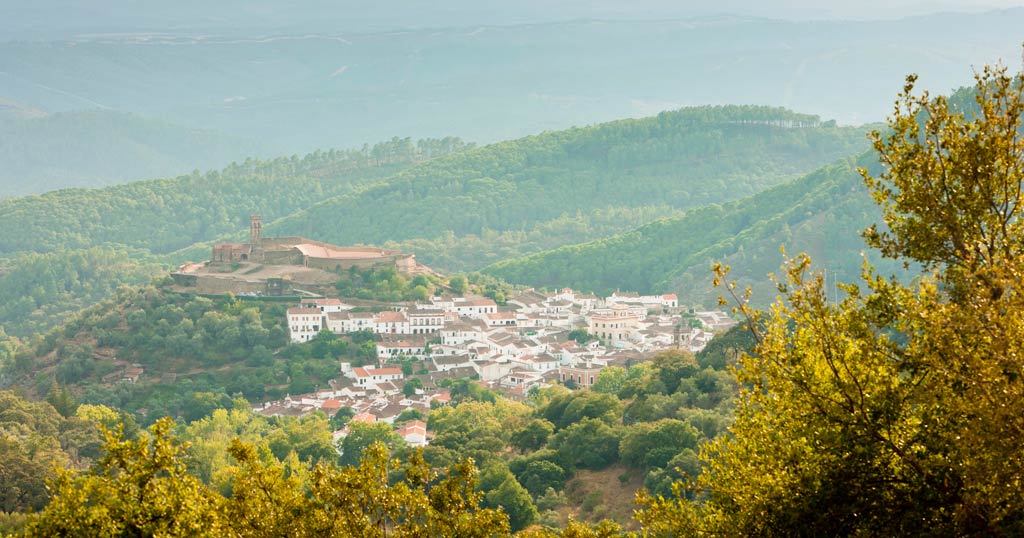
A view of Almonaster la Real from San Cristóbal Hill.
Situated in the heart of the Sierra de Aracena and Picos de Aroche Natural Park, at an altitude of 916 metres and with a population of just under 1,800, this enclave is a living testament to the most authentic rural Andalusia. Those planning a visit to the Sierra de Aracena are usually drawn by the scent of its pastures and the reputation of its cuisine, but a visit to Almonaster offers something more: a spiritual allure, hidden viewpoints designed for taking in the landscape at a leisurely pace, and a heritage that is deeply moving due to its exceptional state of preservation.
What you will find here
THE ALMONASTER MOSQUE: A JOURNEY BACK TO THE 9TH CENTURY AMIDST WALLS AND LEGENDS
Topping the hill that overlooks the hamlet stands the fortified complex, a place where the stone tells the story of centuries of cultural coexistence. Within this ancient 9th-century castle-fortress lies an architectural rarity quite unique to the Iberian Peninsula: the Al-Andalus mosque in Almonaster la Real.
- Opening season: all year round
- Opening hours: Monday to Sunday, 10.00–18.00
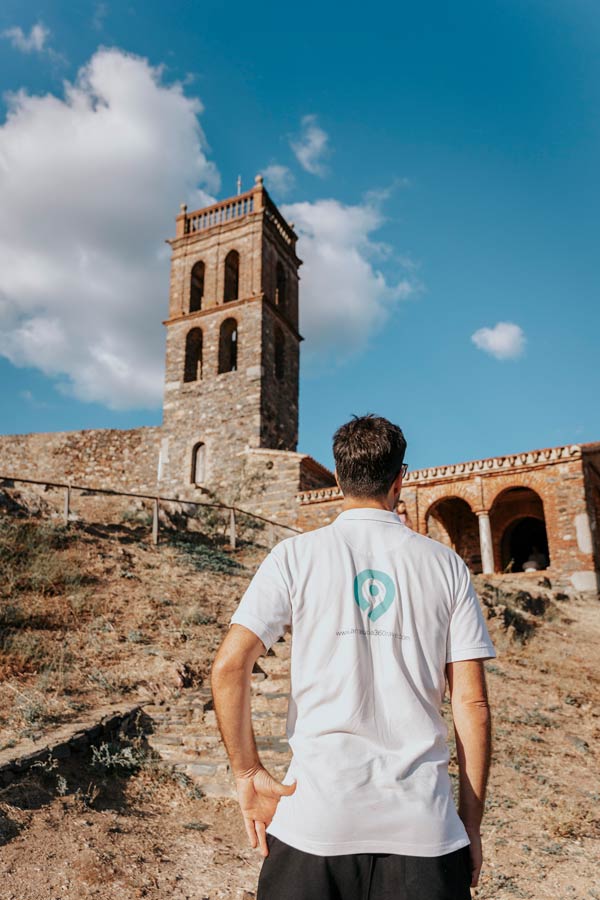
Exterior of the mosque in Almonaster la Real, Sierra de Aracena, Huelva.
Built between the 9th and 10th centuries on the ruins of an earlier Visigothic temple, this is the only rural mosque in Spain that remains virtually intact. As you cross the threshold, the silence becomes thick and reverent. Light filters faintly through reused Roman columns and horseshoe arches, drawing the eye towards the mihrab, which retains the solemnity of its early days.
Following the Castilian conquest, the site was consecrated as a chapel, incorporating Gothic and Mudejar elements without detracting from its original Islamic simplicity. Walking through its ablution courtyard or strolling along the outer walkway in the evening light evokes a profound sense of spirituality; that of standing before a place of worship over 1,000 years old where various religions have been practised.
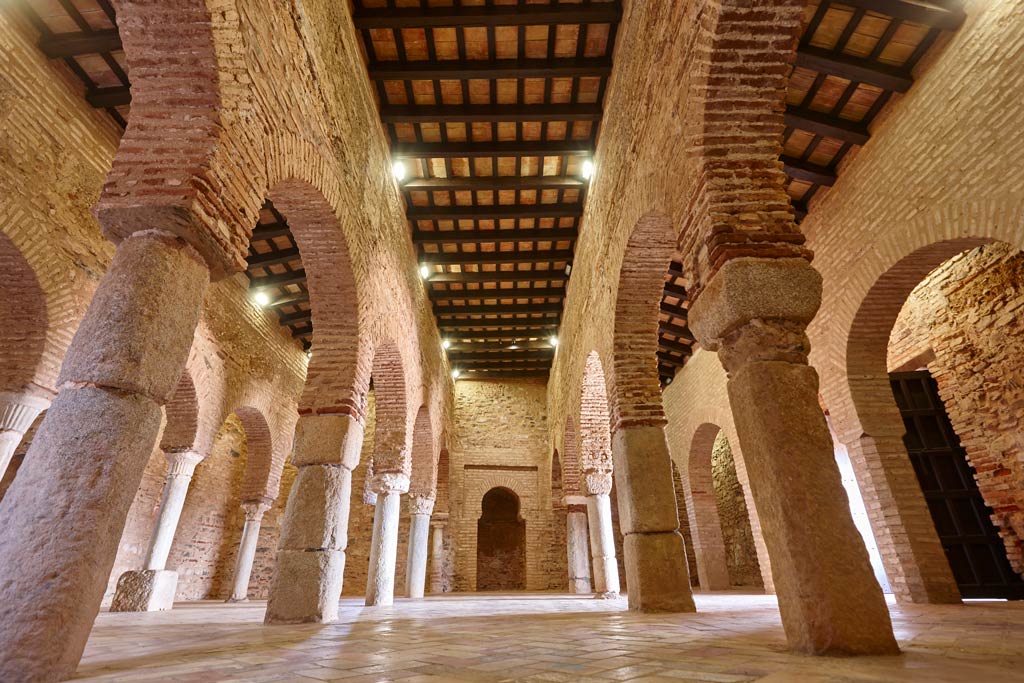
Inside the Almonaster La Real Mosque.
The ruins of the castle and the mosque are undoubtedly the must-see attractions on a visit to Almonaster la Real.
VIDEO OF ALMONASTER LA REAL
On our last visit to Almonaster, we took the opportunity to film some footage of the village: its streets, the mosque, the bullring… Although it’s usually a very quiet village, this time we happened to be there during the Islamic Culture Festival. The streets of Almonaster were transformed into a souk filled with stalls selling crafts and food. We came away with some excellent cheeses and cured meats typical of Huelva’s cuisine.
A BULLFIGHTING ARENA INSIDE A CASTLE
Your visit to Almonaster la Real should include a visit to the bullring. Before descending from the fortress that houses the mosque, you must stop off at the ancient bullring. Partially carved out of the rock, like a Roman amphitheatre, it was built in 1821, making it over 200 years old. Some of the materials from the medieval city walls were used in its construction.
Interestingly, the square is situated within the castle’s walled enclosure, which also houses the mosque. The square remains in use and, as well as bullfights, cultural events are also held there.
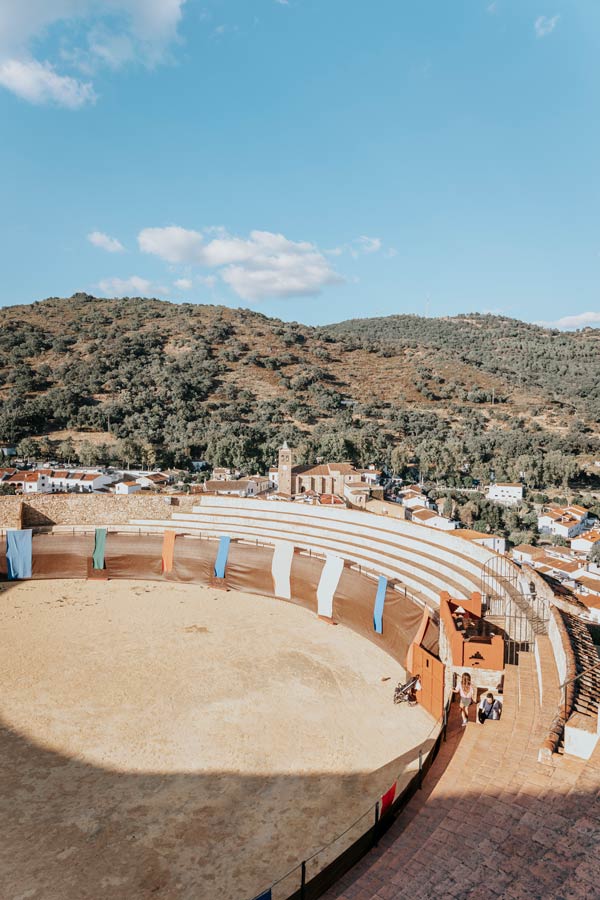
The old bullring.
VISITING ALMONASTER: THE ART OF WANDERING WITHOUT A DESTINATION
The appeal of Almonaster la Real is not limited to its fortress. In 1982, its town centre was designated a Historic and Artistic Site, a fact that is immediately apparent as you stroll through its streets, paved with local stone and flanked by immaculately whitewashed houses. Here, traditional architecture blends Manueline façades, Mudejar entrance halls and Renaissance details with astonishing harmony.
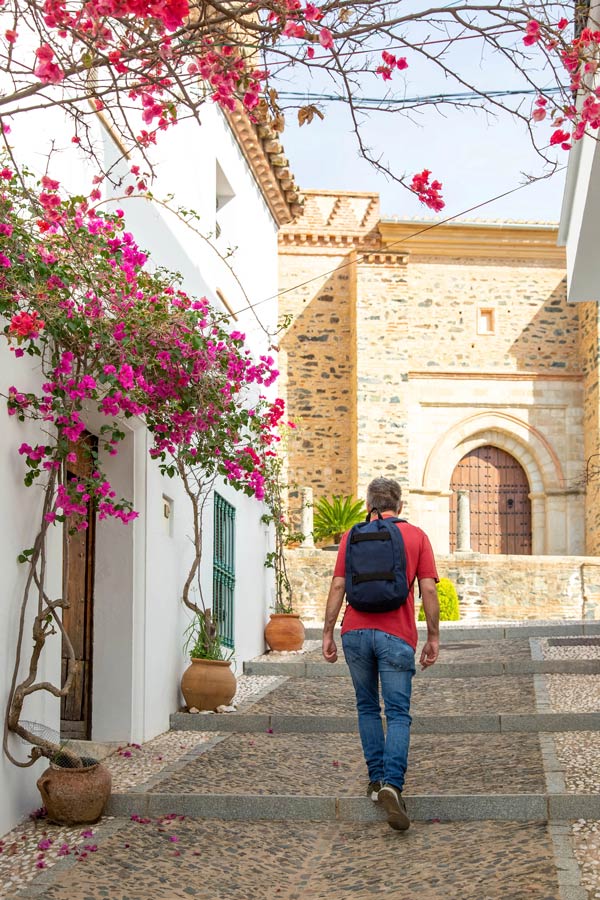
La Torre Street, with the Church of San Martín in the background.
During a private tour of its most distinguished spots, there are three must-see stops on your visit to Almonaster:
- The Church of San Martín: a magnificent church combining 15th-century Gothic and Mudejar styles, notable for its spectacular façade in the Portuguese Manueline style, a subtle reminder of its proximity to the Portuguese border.
- Chapel of the Holy Trinity: Situated in the centre of the village, it embodies the very essence of the Baroque churches of the Aracena mountain range. We recommend you take a close look at the bell gable with its characteristic glazed ceramic finials.
- Viewpoints with soul: spaces designed for leisurely contemplation, such as the Era de la Cuesta or the Paseo de Ronda at the mosque itself. Here, the fresh mountain air and the view of the reddish rooftops invite you to pause and let time stand still.
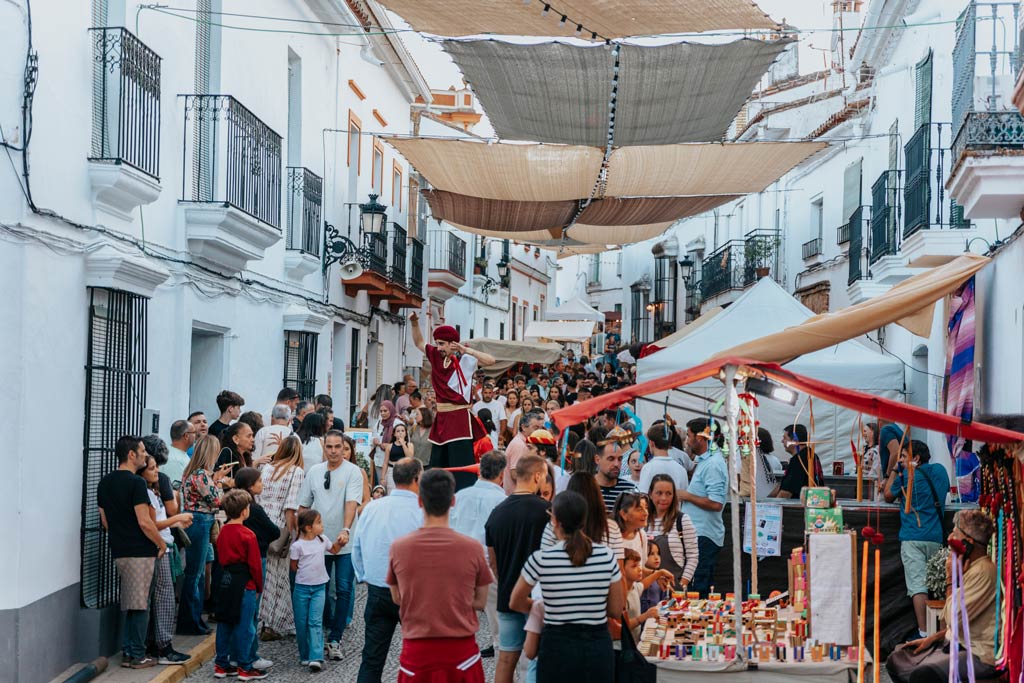
Jacinto Nava Street in Almonaster la Real during the Islamic Culture Festival.
And yes, of course, you don’t need to use Google Maps to find your way around here. You have to get lost, spot the castle in the distance and walk in that direction, letting each bend in the road surprise you with a beautiful street, an architectural detail or a scene from everyday life.
Be sure to stop off at the Plaza de la Constitución and the Plaza de la Cruz del Llano. They are ideal spots for observing life in Almonaster.
MUST-DO HIKES DURING YOUR VISIT TO ALMONASTER
The countryside surrounding the town is a green tapestry of biodiversity. The Sierra de Aracena Natural Park offers the perfect setting for those who enjoy outdoor activities combined with the utmost comfort. This natural area is characterised by its low-lying, gently rolling hills, making it an ideal place to enjoy trails that are not too steep.
To explore the terrain of the area, we suggest the following walking routes, which can be adapted to suit different paces and are always set against a backdrop of lush landscapes:
- San Cristóbal Hill: Considered the highest point in the region at an altitude of 913 metres. A circular route of approximately 12.8 kilometres leads to the summit, offering a 360-degree panoramic view that takes in the vastness of the pastures and the neighbouring villages.
- Aldeas de Poniente and Las Cuatro Riveras: Signposted trails that wind their way through gallery forests, crossing crystal-clear streams and winding beneath the shade of centuries-old chestnut, holm oak and cork oak trees, where livestock graze in complete freedom.
- The Tenería Bridge. Very close to the village, following the old Roman-era road that linked it to Riotinto, you can reach the ‘Puente de la Tenería’ bridge and cross the stream.
- Puente de las Tres Fuentes: A little further on, you’ll find this magnificent feat of industrial engineering attributed to Gustave Eiffel’s school. This iron viaduct, which blends almost poetically into the mountainous landscape, breaks with the rural aesthetic with an unexpected avant-garde sophistication.
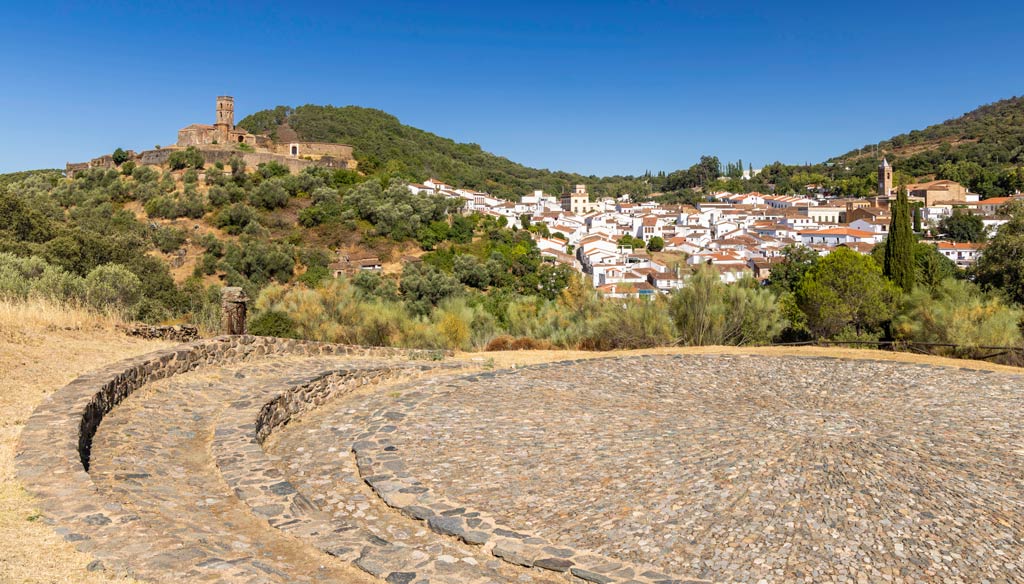
A view of Almonaster la Real from one of the nearby footpaths.
HIGH-END MOUNTAIN CUISINE: THE CULT OF THE IBÉRICO AND FOREST CUISINE
In this corner of the south, the landscape takes its place at the table. The pasturelands of Almonaster la Real provide the raw ingredients for one of the world’s greatest gastronomic treasures: acorn-fed Iberian pork. Iberian ham, pork loin and artisanal cured meats, dried in the cool mountain air, are an essential start to any lunch in the area.
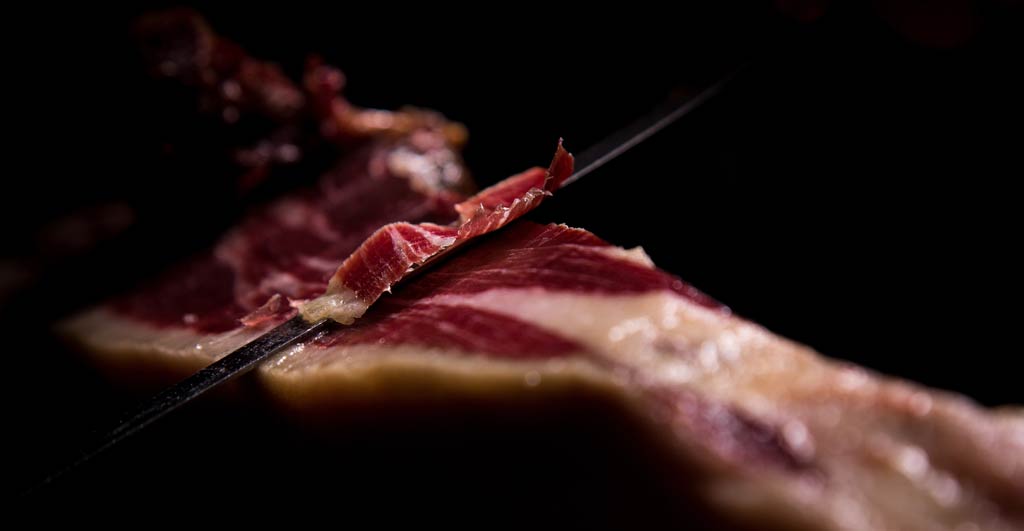
Iberian ham, the essence of the Sierra.
No visit to Almonaster la Real would be complete without sampling the local cuisine. The local cuisine is renowned for its traditional, time-honoured dishes – recipes that the area’s restaurants have proudly preserved:
- Specialities from the dehesa: Fine cuts such as the ‘secreto’, ‘presa’ and ‘pluma ibérica’, grilled over an oak fire. There are several restaurants with an excellent reputation, such as Las Palmeras, Isabel II and El Rincón de Curro. All three are undisputed benchmarks for sampling these meats and their famous Iberian suckling pig.
- Traditional cookbooks: Unique dishes such as ‘guiso de pobre’, ‘sopa de olores’, dressings made with wild oregano, and the hearty ‘sopa de Carnaval’.
- Cutting-edge mycology: During the autumn months, the woodland floors of the mountains offer an unrivalled variety of wild mushrooms (gurumelos, tentalazos and boletus). Scrambled eggs with mushrooms and roasted mushrooms then take centre stage on the finest dining tables.
- A sweet finish: The after-dinner chat continues with artisanal cherry or acorn liqueurs, served alongside local goat’s cheeses, pure orange blossom honey and traditional pastries such as ‘tortas del cura’ or ‘pestiños’.
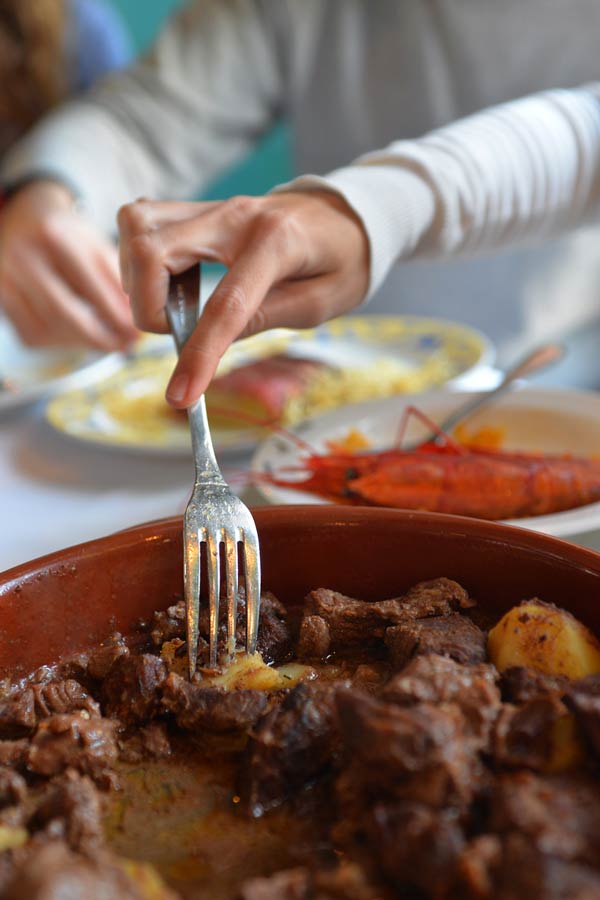
Delicious game stews.
Here’s an article where you can find out more about Huelva’s cuisine.
ACCOMMODATION WITH CHARACTER: THE ART OF HOSPITALITY
A holiday in the mountains calls for surroundings that respect the tranquillity of the environment. Almonaster la Real has few exclusive places to stay where historic architecture blends with modern comforts, but if one were to be singled out, it would undoubtedly be the Hotel Luz Almonaster. It is a boutique hotel with just 9 rooms and one flat.
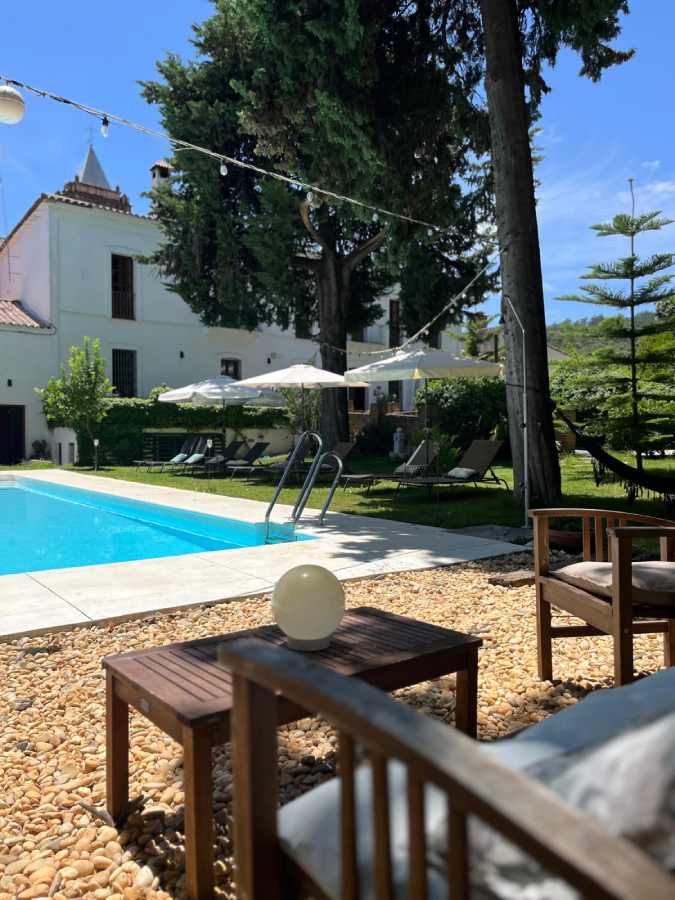
The garden at the Hotel Luz: a paradise within a paradise.
The elegance of the place speaks for itself in the photographs. It also boasts a peaceful garden with a swimming pool where tranquillity reigns. As you leave the hotel, you’ll find yourself face to face with the Church of San Martín, the 15th-century church we mentioned earlier. It’s the ideal base for exploring Almonaster and its surroundings, but it’s also perfectly situated for visiting the other villages in the Sierra de Aracena and Picos de Aroche Natural Park.
A GUIDE FOR THE PRIVATE TRAVELLER: TIPS FOR A PERFECT STAY
- The ideal time to visit: Although the mountains are stunning all year round, spring paints the footpaths with wildflowers, whilst autumn unfurls a symphony of golden hues amongst the chestnut groves and marks the start of the mushroom-picking season and the cultural events at the mosque. Perhaps late October or early November is when the ochre tones reach their peak.
- Getting there: Almonaster la Real is ideally situated for an exclusive road trip, being 1 hour and 30 minutes from Sevilla and 1 hour and 15 minutes from the city of Huelva. Having your own car is the ideal way to explore the neighbouring villages with complete flexibility.
- Estimated time: A weekend is enough to see the main sights, but we recommend planning a three-day stay to enjoy the walking routes and culinary experiences at a leisurely pace. Due to the high demand for and exclusivity of boutique accommodation, it is advisable to make bookings well in advance.
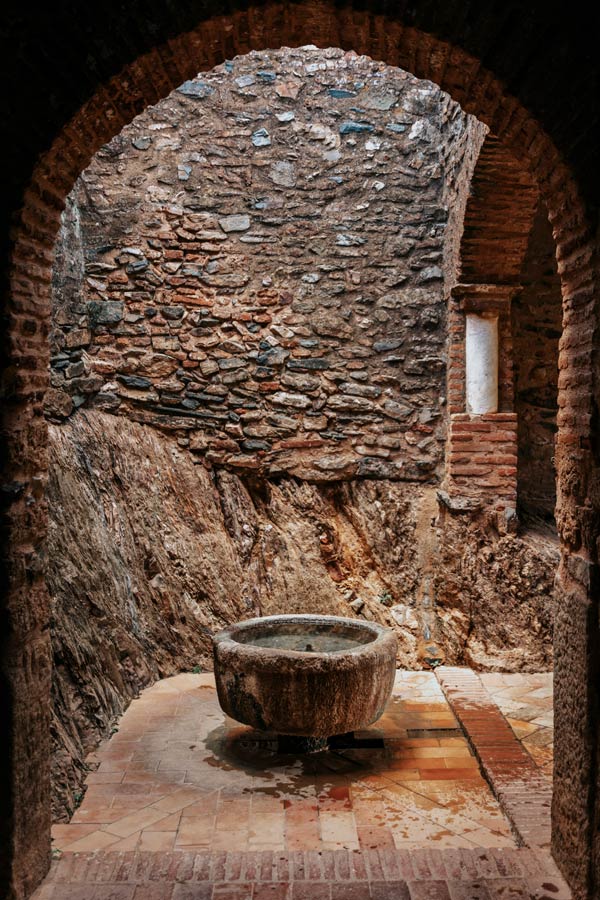
A pile of stones at the entrance to the mosque in Almonaster la Real.
Mysticism, tranquillity and endless horizons come together at this fortress in Huelva. Almonaster la Real awaits travellers who have learnt that true contemporary luxury lies not in opulence, but in the privilege of experiencing history and nature in their purest and most authentic form.
WE’LL PLAN YOUR TRIP TO ALMONASTER FOR YOU
We’ve given you the key information you need to discover this fantastic village in the Huelva mountains, but if you’d prefer to have everything organised for you, at Andalucía 360 we specialise in bespoke private tours.
Do you need transport, exclusive accommodation in the area, a local chef to cook for you at home, or a private tasting of the finest Huelva ham? It’s all within your reach. Give us a call or drop us a line.

A LOCAL DAY OUT AND MUCH MORE
Near Almonaster (about 45 minutes away) lies one of the most amazing places on earth. We’re talking about the Riotinto Mines, a unique landscape and one of the largest open-cast mines in the world. Click on the banner to find out more.
